TouchBistro vs Toast: Which Is Better for Restaurants?
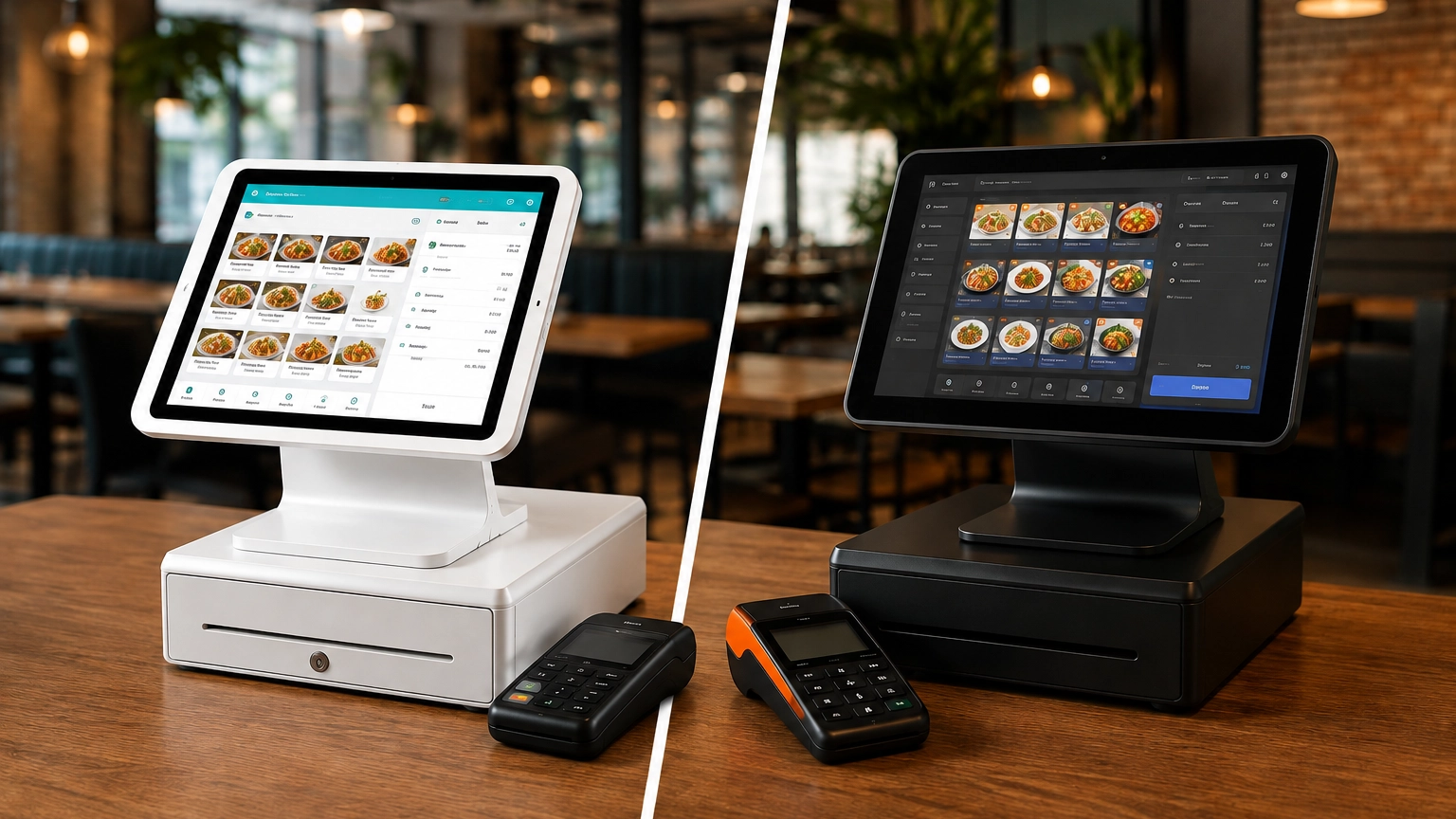
TouchBistro and Toast are both purpose-built restaurant POS systems, but they suit different restaurant operations. Toast
Last updated 29/09/2026
When choosing between Shopify and Square POS, there is no objective “best retail POS system”; the right fit comes down to how you run your business. Both are popular with retailers but serve different needs. Shopify POS is designed for businesses selling online and in-store, while Square POS offers a straightforward setup, making it popular among small retail stores and pop-ups.
As you compare the two, consider how important ecommerce, inventory management, hardware, payment processing, pricing, and growth plans are to your business. The right choice depends on which platform best supports the way you sell today and where you plan to grow.
If you sell both online and in-store, Shopify POS is generally the better choice, especially if you already use Shopify ecommerce. If you want a simple, flexible POS system for a small retail store or a pop-up or other straightforward operation, Square POS is often the stronger fit. The right platform depends on your sales channels, inventory needs, and long-term growth plans.
| Provider | Best For | Main Strength | Potential Limitation |
|---|---|---|---|
| Shopify POS | Ecommerce-connected retail and omnichannel selling | Native connection between your online and in-store sales, inventory and customer data | Delivers the most value when you're already using Shopify ecommerce |
| Square POS | Small businesses, simple retail, pop-ups | Straightforward setup and broad tools for small retailers | More advanced retail and ecommerce requirements may require paid features or a more specialized POS solution |

Shopify POS is an omnichannel POS system, designed for retailers selling both online and in person. Shopify POS works exclusively through Shopify’s ecosystem, so your products, inventory, customer profiles, and order history are connected across your online and in-store sales channels. This connected approach to omnichannel selling makes it ideal for omnichannel retailers, boutiques, and growing brands that want to manage online and in-store operations from a single platform.

Square POS is a versatile point-of-sale system built for a wide range of retailers. Its straightforward setup makes it well-suited to retail stores, pop-ups, cafés, and mobile sellers looking for a quick way to accept payments and process sales. Depending on your plan, Square supports product catalogs, reporting, inventory management, and a choice of hardware, making it an accessible POS system without adding unnecessary complexity.
| Feature | Shopify POS | Square POS |
|---|---|---|
| Retail focus | Strong for Shopify-connected retail | Strong for small retail and general small business |
| Ecommerce integration | Native integration with Shopify ecommerce | Available, but not as Shopify-native |
| Inventory sync | Strong for retailers selling online and in-store through Shopify | Available depending on your setup and plan |
| Product variants | Strong support for ecommerce-led retail | Available depending on your setup and plan |
| Customer profiles | Available, with additional functionality depending on your plan | Available depending on your setup and plan |
| Hardware options | Card readers, terminals, retail stands, barcode scanners, receipt printers and cash drawers | Card readers, terminals, registers, handheld devices, barcode scanners and other compatible hardware |
| Payment processing | Shopify Payments and supported payment options depending on your setup | Square payment ecosystem |
| Small business simplicity | Best if you're already using Shopify | Strong choice for straightforward small business setups |
| Pop-up selling | Strong for ecommerce brands selling at markets and events | Strong for mobile sellers and pop-up businesses |
| Multi-location retail | Available depending on your plan and setup | Available depending on your plan and setup |
| Best fit | Retailers selling online and in-store | Small businesses and straightforward retail operations |
Shopify POS and Square POS both provide the tools needed to manage your day-to-day operations, but they’re designed with different types of retailers in mind. Key considerations include your checkout process, inventory, customer management, and sales channel requirements.
If you already sell through Shopify, Shopify POS directly connects to your online store, keeping your product catalog, inventory, customer profiles, and order history in sync across your ecommerce and physical stores. Barcode scanners, returns and exchanges, staff permissions, and reporting are all built around this ecosystem to help you manage your retail operations from a single platform.
Square POS is a strong choice if you run a small retail store and want a straightforward POS and payment solution. It supports product catalogs, barcode scanning, inventory management, customer profiles, reporting, and a range of hardware options, making it well suited to independent retailers that don’t need a deeply integrated ecommerce platform.
If you run a larger retail operation with more complex inventory needs across multiple locations, it may be worth looking at alternatives to Shopify POS and Square POS, such as Lightspeed.
If your business sells both online and in-store, Shopify POS may be the stronger option. Because it’s built into the Shopify ecosystem, you can connect your products, inventory, customer profiles, and orders across your online and in-store sales channels through a shared product catalog, inventory, and database. If you offer services such as buy online, pick up in store or regularly sell at pop-up events, Shopify POS helps keep your catalog and inventory aligned without switching between platforms.
Square POS may be your preferred choice if your online selling requirements are relatively straightforward. The platform supports online selling, ecommerce integrations, customer profiles, and inventory management. However, if ecommerce is central to your business or you’re planning to expand your omnichannel strategy, Shopify POS may be the better long-term fit.
If you’re choosing your first POS system or running a growing retail business, both Shopify POS and Square POS offer straightforward ways to accept payments, manage sales, and serve customers. What separates them is whether you primarily sell online or in person.
If you don’t require extensive ecommerce capabilities, then Square may be the stronger option. It’s easy to set up, supports multiple payment methods, offers a range of hardware options, and works well for retail stores, mobile sellers, and pop-up events. If you’re looking for an easy-to-use POS system with a simple product catalog, Square is a strong choice.
Shopify POS is better suited to retailers already selling online through Shopify, or planning to in the near future. While basic in-person selling is included with every Shopify plan, additional retail functionality is available through POS Pro for businesses that need more advanced features. If you plan to expand your online sales alongside your physical store, Shopify POS provides a connected platform that grows with your business.
Shopify POS and Square POS both make it easy to sell and take payments at markets, trade shows, or away from a traditional checkout. The best option here depends on whether your priority is keeping your online store connected or having a fast and simple way to sell on the go.
Shopify POS is a strong choice for ecommerce brands selling at pop-up events because it keeps your product catalog, inventory, and customer data connected with your online store. Portable hardware, digital and printed receipts, and inventory synchronization help ensure sales made at an event are reflected across your business without manually updating multiple systems.
Square POS is well suited to businesses needing a fast setup and straightforward payment acceptance. It supports portable hardware, digital and printed receipts, product catalogs, and inventory management, making it a practical option for pop-ups and temporary retail locations. Square POS also supports offline payments provided transactions are processed within 24 hours of reconnecting to the internet, allowing you to continue to sell even in low-connectivity areas.
Shopify’s platform offers strong POS inventory management features, especially if you sell across multiple channels. Because it’s linked to Shopify’s wider ecommerce network, your products, variants, SKUs, inventory levels, and customer order history stay connected across online and in-store sales channels. This simplifies stock tracking, returns and exchanges, and maintaining accurate inventory as your business grows.
Square POS also provides solid inventory management for many small retailers. It supports product catalogs, variants, SKUs, stock tracking, customer profiles, and reporting, making it well suited if you have simpler inventory requirements. If you manage a large catalog or multiple locations, then you may benefit from comparing Shopify POS and specialist retail platforms such as Lightspeed.
Both Shopify POS and Square POS support essential retail POS hardware such as card readers, countertop terminals, barcode scanners, receipt printers, cash drawers and mobile selling devices. They also offer customer-facing display options, although they are not included as standard and may require additional hardware.
If you already have POS hardware, check whether it’s compatible with your preferred platform or whether you’ll need to purchase new devices.
Another thing to confirm is how hardware is purchased, as it may be bought outright, financed, or bundled as part of your plan. When assessing potential hardware, consider how it fits your store layout, checkout process, and future growth.
Reviewing your hardware requirements can help you avoid paying for hardware you don’t need while ensuring you have the right equipment for your retail operation.
Both Shopify POS and Square POS accept in-person card payments and contactless options such as digital wallets. Both also support online transactions, allowing you to accept payments online and in-store through the same platform.
When comparing payment processing, always look beyond the advertised transaction fees. Confirm each provider’s current in-person and online processing rates, payment processor terms, ecommerce payment setup, and chargeback policies before making a decision. Your sales volume and the types of payments you accept can have a significant impact on your overall processing costs, so compare each provider based on how your business operates.
The total cost of ownership of a POS system includes software plans, hardware, payment processing fees, staff accounts, inventory tools, support options, and any paid add-ons your business may require.
For Shopify POS, you must factor in the cost of your Shopify ecommerce subscription, alongside the POS plan of your choice. Square POS offers a free plan, although it has limited functionality and does not include hardware. When assessing Square POS pricing, consider hardware purchases, payment processing costs, and any optional paid features or add-ons you choose to use.
Look beyond the advertised monthly subscription cost and compare the total cost of the POS system based on your operational requirements and future growth plans.
For a detailed breakdown of pricing models and the costs involved, see our guides to POS system pricing, how much a POS system costs, and POS payment processing fees.
| Pros | Cons |
|---|---|
| Excellent choice for retailers already using Shopify ecommerce | Delivers the most value when paired with the Shopify ecosystem |
| Keeps online and in-store sales, inventory and customer data connected | May be less suitable for retailers without ecommerce ambitions |
| Strong omnichannel capabilities for ecommerce-led retailers and growing retail brands | Total costs may include both a Shopify ecommerce subscription and a POS plan |
| Well suited to boutiques and retailers with larger product catalogs | Some retail features depend on your plan or POS setup |
| Pros | Cons |
|---|---|
| Easy to set up and use for many independent retailers | Omnichannel functionality may not be as deeply integrated as Shopify for Shopify-based retailers |
| Well suited to small retail stores, markets and pop-up events | Some advanced features require paid plans or optional add-ons |
| Flexible hardware options for different retail environments | Retailers with complex inventory requirements may benefit from comparing specialist retail POS systems |
| Suitable for retailers that don't need an ecommerce platform | Growing retailers may eventually require more advanced inventory or reporting capabilities |
| Business Type | Better Fit | Why |
|---|---|---|
| Ecommerce-led retailer | Shopify POS | Native connection between your online and in-store sales, inventory and customer data. |
| Small retail store | Square POS or Shopify POS | Depends on your ecommerce requirements and inventory needs. |
| Boutique or clothing store | Shopify POS or Square POS | Depends on product variants, online selling, and customer management requirements. |
| Pop-up seller | Square POS or Shopify POS | Choose based on whether keeping your ecommerce store and event sales in sync is important. |
| Retailer already using Shopify | Shopify POS | Native integration with your existing Shopify ecommerce platform. |
| Retailer not selling online | Square POS | Good fit for retailers that don't rely heavily on ecommerce. |
| Inventory-heavy retailer | Shopify POS or a specialist retail POS | Compare inventory depth, reporting and multi-location requirements before deciding. |
| Multi-location retailer | Shopify POS, Square POS or a specialist retail POS | The right choice depends on your reporting, inventory management and plan requirements. |
Although Shopify POS and Square POS are good choices for many retailers, they may not be the right fit for your business. There are a range of other providers that may be worth considering:
Lightspeed Retail: A strong option if you have a large or complex inventory and need advanced stock management, reporting, and multi-location inventory capabilities.
Clover: A system that offers flexible hardware options and access to an extensive app marketplace, making it a good choice if you prioritize customization.
SumUp: A solid choice if you’re a small retailer looking for a simple way to accept card payments without the complexity of more advanced systems.
Toast: Although Toast is a restaurant-first platform, it does offer a retail configuration with core retail functionality.
TouchBistro: Another restaurant-focused POS platform built for hospitality businesses. Because the platform is designed specifically for restaurants and doesn’t offer retail functionality, it may be the weakest choice for most retailers.
If you’re still comparing your options, explore our guides to the Best Retail POS Systems and Best Restaurant POS Systems to find the platform that best matches your business.
Shopify POS is a stronger option if you sell both online and in-store, especially if you already use Shopify’s ecommerce platform. Its ability to keep your online and in-store inventory, products, and customer data connected makes it well-suited to an ecommerce-led retailer, boutique, or growing omnichannel brand.
Square POS is a great option for small retail stores, independent retailers, and pop-up sellers looking for a straightforward POS system with simple setup and flexible hardware. It’s well suited to businesses with less complex retail requirements where online selling is not a priority.
Ultimately, the right choice depends on how your business operates. Consider your ecommerce requirements, inventory complexity, hardware needs, payment processing costs and overall budget before making a decision.
Compare Shopify POS, Square POS and other leading retail POS systems with Commercial Experts.
Shopify POS may be a better choice for retailers selling online and in-store, especially if they already use Shopify ecommerce. Square POS is better suited to small retailers wanting a simple POS with integrated payments.
Square POS may be better for small retailers that want simple setup, flexible hardware and integrated payments. Shopify POS is stronger for ecommerce-connected retail.
Shopify POS is generally better for ecommerce-led retailers. Square POS is a strong choice for small stores, independent retailers and pop-up sellers.
Shopify POS is usually the better choice for ecommerce because it integrates natively with Shopify, connecting online and in-store sales, inventory and customer data.
It depends. Compare software plans, ecommerce costs, hardware, payment processing fees, add-ons and transaction fees rather than advertised starting prices.
Shopify POS requires a Shopify subscription. You don’t need to actively sell online, but the POS operates within the Shopify platform.
Yes. Square POS supports both online and in-person sales, although retailers should compare its ecommerce capabilities with Shopify POS.
Lightspeed Retail is ideal for inventory-heavy retailers, Clover offers flexible hardware, and SumUp suits very small retailers needing simple card payments, while Toast and TouchBistro are worth considering if you run a restaurant or hospitality business.
TouchBistro and Toast are both purpose-built restaurant POS systems, but they suit different restaurant operations. Toast
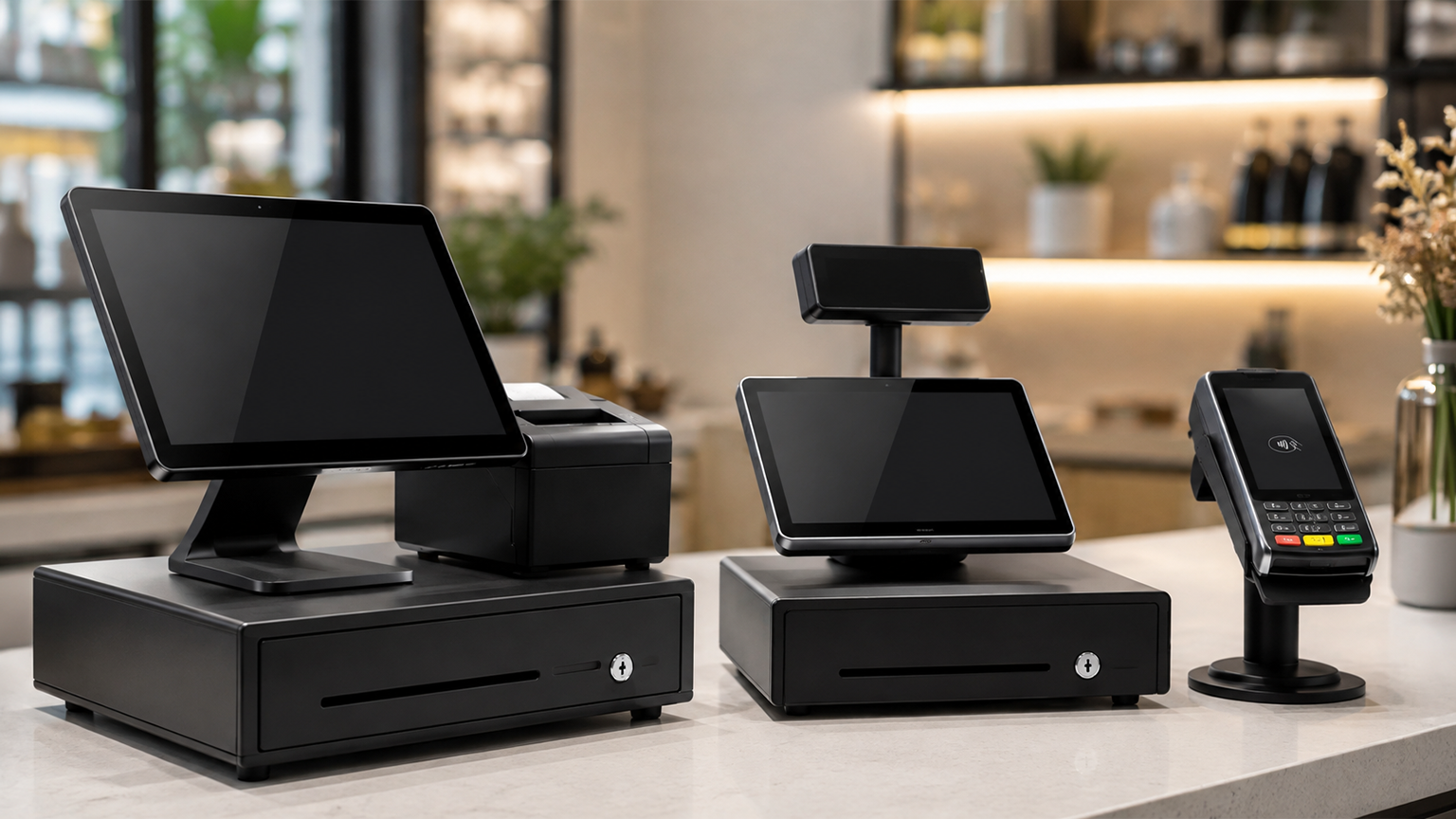
Although POS systems, cash registers, and credit card machines all help you accept payments at checkout,
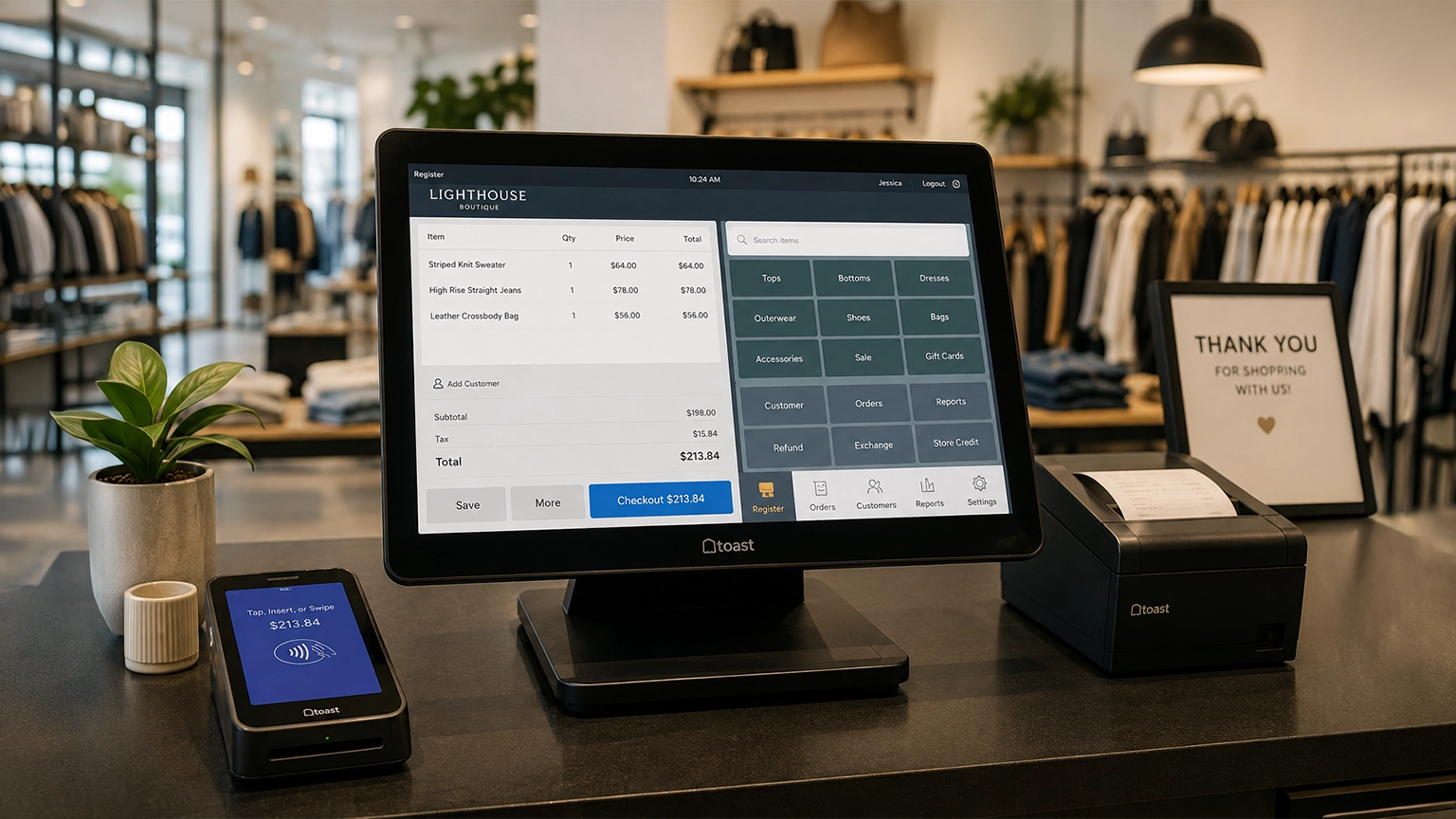
Retail POS systems do much more than process payments. Depending on your provider and plan, they